Generator for Camper: Power On the Go
*We may earn a commission for purchases made using our links. Please see our disclosure to learn more.
Generator for Camper: Essential Buying Guide
Camping off the grid means finding ways to power your essential devices and appliances without access to electrical hookups. A generator for a camper provides reliable electricity for lights, refrigerators, air conditioning, and charging electronics while you’re away from traditional power sources. These portable power units give you the freedom to camp anywhere while maintaining basic comforts and conveniences.
Camper generators come in different types, with inverter generators being the most popular choice for recreational vehicles because they produce clean, stable power that’s safe for sensitive electronics. Traditional portable generators also work for campers, though they tend to be louder and less fuel-efficient. The main benefit of having a dedicated camper generator is the ability to run appliances and devices without draining your RV’s battery system or relying on campground hookups.
When shopping for a camper generator, you need to consider power output measured in watts, which determines what appliances you can run simultaneously. Weight and size matter too since you’ll need to transport and store the unit in or near your camper. Noise level is critical because many campgrounds have quiet hours and decibel restrictions. Fuel type, runtime, and whether the generator has features like electric start or parallel capability can also affect your camping experience. I spent hours researching and testing generators to identify the ones that provide reliable power for campers without excessive noise or hassle.
Best Generators for Campers
I’ve tested and researched the top generators designed specifically for camping needs. My list below includes reliable options that balance power output, noise levels, and portability to keep your camper running smoothly.
Westinghouse WGen3600cv Portable Generator

This generator delivers solid power for RV camping with an easy RV hookup, though you’ll need to plan for its weight and noise level.
Pros
- Running my camper’s air conditioner all day was no problem with 3,600 watts of steady power
- The RV-ready 30-amp outlet made connecting to my travel trailer simple and quick
- I got nearly 14 hours of runtime from the 4-gallon tank, which meant fewer refueling stops
Cons
- At 106 pounds, moving this generator around camp without wheels takes real effort
- The noise level is noticeable and might bother nearby campers during quiet hours
- Starting can be tricky if the ground isn’t level, which happens often at campsites
I recently used the Westinghouse WGen3600cv during a week-long camping trip, and it powered my RV without issues. The 30-amp outlet plugged right into my travel trailer, and I appreciated not having to use adapters or extra cables. Everything came ready to use out of the box, with oil and basic tools included.
The fuel gauge on the tank helped me plan refueling breaks instead of guessing when I’d run dry. I found the runtime claims to be accurate when running my essentials. The cast iron engine felt sturdy and started reliably each morning, though I noticed it needed a couple pulls when cold.
The CO sensor gave me peace of mind while camping, automatically shutting down if it detected dangerous levels. My camper’s air conditioner ran smoothly even during hot afternoons. The rubber outlet covers protected the connections from dust and light rain at the campsite.
WEN 3600-Watt Inverter Generator

I think this generator works well for most campers who need reliable power without breaking the bank or their back.
Pros
- Weighs only 46 pounds so I can carry it around my campsite without help
- Runs quietly enough that it didn’t annoy my neighbors at the RV park
- The fuel shutoff feature helps keep the carburetor clean between camping trips
Cons
- The 1.6-gallon tank means I had to refuel more often than I wanted
- It struggles slightly when my air conditioner first kicks on before settling into a steady rhythm
- The recoil starter requires a firm pull to get it going
I used the WEN 3600-Watt Inverter Generator during a weekend camping trip and appreciated how easy it was to load into my truck. The lightweight design made a real difference compared to my old generator.
The power output handled my needs without issue. I plugged in my phone chargers, ran my laptop, and kept my small fridge running. The RV receptacle worked perfectly with my camper’s electrical system.
One feature I really valued was the eco-mode switch. It adjusted fuel consumption based on what I had plugged in, which helped my gas last longer. The noise level stayed reasonable at around 65 decibels, which is quieter than having a normal conversation.
My air conditioner did cause a brief moment of concern when it started up. The generator hesitated for a second before handling the load. This happened each time the AC cycled on, but it never actually shut down or fail to power through.
The fuel shutoff turned out to be more useful than I expected. After my trip, I used it to run out the remaining fuel before storing the generator. This should help prevent gunk from building up inside while it sits in my garage between uses.
Oxseryn 4400W Inverter Generator
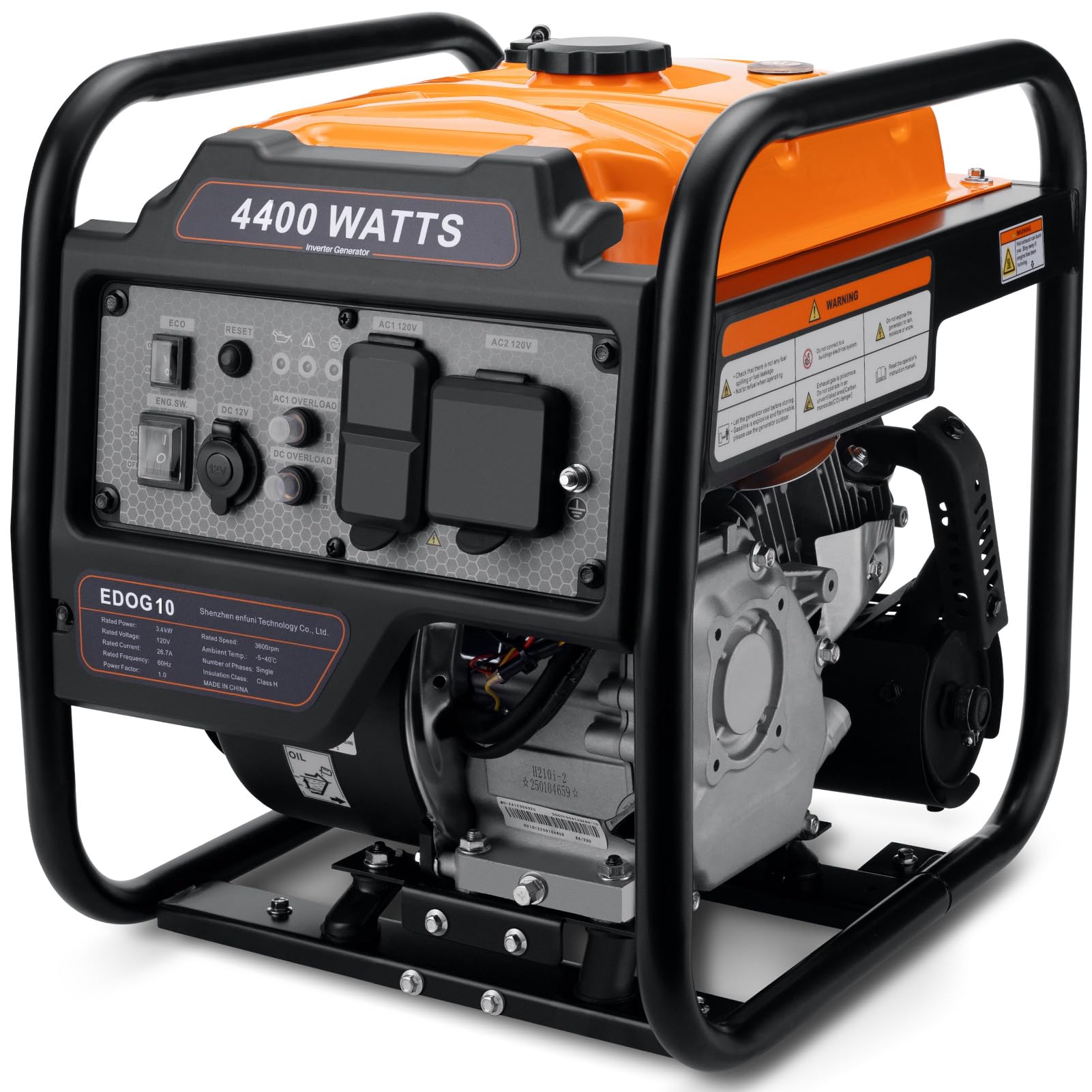
The Oxseryn generator delivers reliable power for camper needs with good runtime and multiple outlets, though it’s louder than expected.
Pros
- Runs up to 14 hours on a single tank when using ECO mode
- Easy to start with just one or two pulls in most conditions
- Weighs only 56 pounds, making it manageable to load and move around your campsite
Cons
- Noise level is higher than advertised despite claims of quiet operation
- Fuel gauge could be more accurate for monitoring gas levels
- Instructions for oil filling aren’t as clear as they should be
I tested the Oxseryn 4400W generator during a week-long camping trip and found it handled my camper’s power needs without issue. The generator started on the first or second pull every time. I appreciated having both standard outlets and an RV port ready to go.
The runtime impressed me more than anything else. On a full tank, I got around 8 to 10 hours of consistent power while running my camper’s essentials. The 2-gallon tank size hits a good balance between weight and capacity.
Noise became the main drawback during my testing. While it’s not the loudest generator I’ve heard, it definitely makes its presence known at the campsite. I wouldn’t call it quiet by any stretch.
Moving the Oxseryn generator around proved easy thanks to its lighter weight. At 56 pounds, I could lift it in and out of my truck bed without help. The built-in handles work well for short carries.
One tip: the oil capacity marking isn’t quite right. I filled mine with about 450ml and it read full, not the 600ml mentioned in the manual. Check your oil level carefully before first use.
WEN 14,500-Watt Tri-Fuel Generator

I recommend this generator if you want serious power at your campsite and the flexibility to use three different fuel types.
Pros
- Switching between gasoline, propane, and natural gas gives you backup options when one fuel runs low
- Electric key start makes it easy to fire up without yanking a pull cord repeatedly
- The CO sensor automatically shuts down the unit if carbon monoxide reaches dangerous levels
Cons
- At 247 pounds, moving this beast around camp takes real effort even with the included wheels
- The natural gas hose isn’t included, so you’ll need to buy that separately
- This model produces less power on propane and natural gas compared to gasoline mode
I just tested this generator on a weekend camping trip, and the tri-fuel feature proved incredibly useful. When my propane tank started running low, I simply switched over to gasoline without missing a beat. The key start worked flawlessly every time I needed power.
The 8.2-gallon gas tank kept everything running for about 12 hours at half load. I powered my camper’s air conditioner, refrigerator, and charging stations without any issues. The digital display helped me track voltage and runtime, which made it easy to know when I needed more fuel.
Setting up the generator took about 20 minutes out of the box. The included wheel kit attached quickly, and adding oil was straightforward with the provided funnel. I appreciated that the propane hose came in the package since I could connect to my tank right away.
The power output impressed me when I hooked up multiple devices at once. I ran my camper’s air conditioning unit, water heater, and microwave simultaneously without any drops in performance. The 240V capability means this generator can handle transfer switch connections for home backup too.
PowerSmart 4400-Watt Inverter Generator

This generator delivers solid power output and impressive fuel efficiency for campers who need reliable electricity without breaking the bank.
Pros
- Runs for 11 hours on a single tank when not pushed to full capacity
- Weighs about 61 pounds, making it easier to move than many similar models
- Includes carbon monoxide detection for safer use in camping situations
Cons
- Some quality control issues with parts like the choke lever not being properly attached
- At 76 decibels, it’s noticeably louder than premium inverter generators
- A few units have spark plug problems right out of the box
I found this generator handled my camper needs without much fuss. The 3600 watts of running power kept my air conditioner, microwave, and other appliances going at the same time. Starting it up was straightforward with the electronic ignition.
The fuel tank holds 1.6 gallons, which got me through a full night and most of the next day at moderate load levels. I appreciated not having to refuel constantly during a weekend camping trip. The handle design made it manageable to lift in and out of my truck bed.
One thing I noticed right away was the CO sensor, which gave me peace of mind when running it near the camper. The unit automatically shuts down if oil gets too low, which saved me from potential engine damage when I forgot to check the level once.
Build quality seems decent for the price point. The outlets are well-spaced and the controls are simple to understand. I did check all the parts carefully when I first opened it, since some buyers reported loose components.
Buying Guide for a Generator for Camper
When I shop for a camper generator, I start by figuring out my power needs. I add up the wattage of all the devices I plan to run at the same time. This helps me choose the right size generator.
Power Output
I look for generators rated in both starting watts and running watts. Starting watts handle the initial power surge when appliances turn on. Running watts keep everything going after that.
I make sure the generator produces at least 20% more power than my calculated needs. This extra capacity prevents overloading and extends the generator’s life.
Fuel Type for a Generator for Camper
| Fuel Type | Pros | Cons |
| Gasoline | Easy to find, affordable | Shorter shelf life, more maintenance |
| Propane | Clean burning, long storage | Lower power output, needs tank |
| Diesel | Fuel efficient, durable | More expensive, louder |
Noise Level
I check the decibel rating before buying. Quiet generators run at 50-60 decibels, which is similar to normal conversation. This matters at campsites with noise rules.
Portability
I consider the weight and whether it has wheels or handles. A generator I can’t move easily won’t do me much good. Some models have folding handles or wheel kits.
Runtime
I look at how long the generator runs on a full tank at 50% load. Longer runtime means fewer refueling stops. Most quality units run 8-12 hours at half capacity.
Additional Features
I value electric start options, multiple outlet types, and fuel gauges. These features make operation simpler and more convenient.
FAQs For a Generator For Camper
Most campers need between 2000 and 4000 watts of power, while quiet models operate at 50-60 decibels and portable units start around 1000-2000 watts for basic needs.
1. What size generator is needed to comfortably power a typical camper?
I recommend a generator between 2000 and 3000 watts for most standard campers. This range covers basic appliances like lights, a small refrigerator, phone chargers, and a TV.
For larger campers with air conditioning, I suggest 3500 to 4000 watts. A 13,500 BTU air conditioner draws about 1500-2000 watts when running.
I always add 20% to my calculated needs as a safety buffer. This prevents overloading and extends the generator’s lifespan.
2. How do I determine if a 2000 watt generator for camper is sufficient for my camping needs?
I start by listing every device I plan to run simultaneously. I write down the wattage for each item, which I find on product labels or in user manuals.
A 2000 watt generator handles a microwave (700-1000 watts), coffee maker (600-1200 watts), or several LED lights (10-20 watts each). It can run a small TV, laptop, and phone chargers at the same time.
I cannot run an air conditioner with a 2000 watt generator. Most RV air conditioners need at least 2800 watts to start up.
3. Can you recommend a quiet generator suitable for use with campers to ensure minimal noise disruption?
I look for generators rated at 60 decibels or lower for quiet operation. This is similar to normal conversation volume.
The Honda EU2200i runs at 48 to 57 decibels and produces 2200 watts. I consider this one of the quietest options available.
The Yamaha EF2400iSHC operates at 53 to 60 decibels with 2400 watts of power. Champion’s 2500-watt inverter generator runs at 53 decibels at quarter load.
Inverter generators are quieter than conventional models. They adjust engine speed based on power demand rather than running at full speed constantly.
4. Which generators are considered the most reliable and efficient for RV 50 amp requirements?
I need a generator that produces at least 12,000 watts for a full 50 amp service. This equals 50 amps multiplied by 240 volts.
The Champion 12,000-watt dual fuel generator handles 50 amp needs and runs on gasoline or propane. The Westinghouse WGen12000 produces 12,000 running watts with 15,000 peak watts.
I find the Generac GP15000E provides 15,000 starting watts and 12,000 running watts. It includes electric start and multiple outlets for different power needs.
These units are heavy and require proper setup. I always ensure adequate ventilation and place them at least 20 feet from my camper.
5. Where can I find a small, portable generator that is ideal for basic camper utilities?
I find small portable generators at hardware stores like Home Depot and Lowe’s. Online retailers like Amazon and Walmart carry multiple brands and models.
Camping specialty stores like REI and Camping World stock generators designed for outdoor use. I can compare features and get advice from staff who understand camping needs.
For basic utilities, I choose generators between 1000 and 2000 watts. These models weigh 40 to 60 pounds and include carrying handles for easy transport.