Camping Fundamentals
*We may earn a commission for purchases made using our links. Please see our disclosure to learn more.
Camping Fundamentals: Essential Skills and Gear Every Outdoor Enthusiast Needs to Know
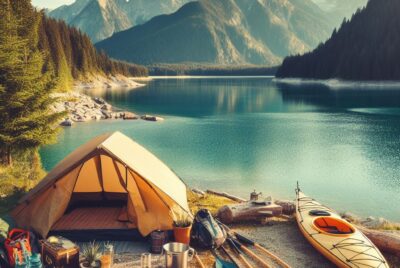
Camping connects you with nature and offers a break from daily routines. Whether you want to spend a weekend at a local campground or explore remote trails, learning the basics makes your trip safer and more enjoyable. This guide covers everything from picking the right gear and setting up camp to cooking outdoors and staying safe in different weather conditions.
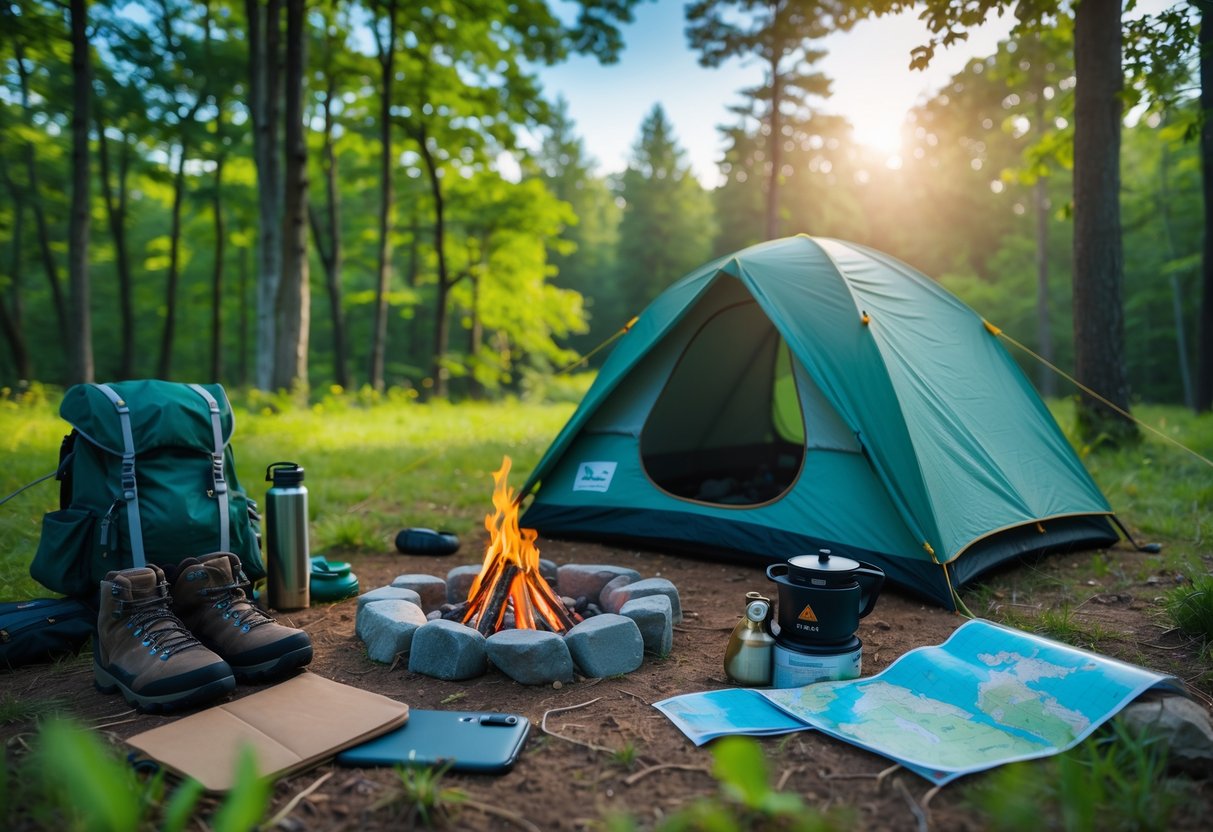
I’ve put together this resource to help you build confidence before your first trip. You’ll learn how to choose a good campsite, start a campfire, and pack the right clothing. Understanding these fundamentals means less stress and more time enjoying the outdoors.
The skills I’ll share go beyond just surviving in nature. You’ll discover how to protect the environment, navigate trails, and be a good neighbor to other campers. These basics form the foundation for any camping adventure, whether you’re pitching a tent for one night or planning a longer trip.
Essential Camping Gear
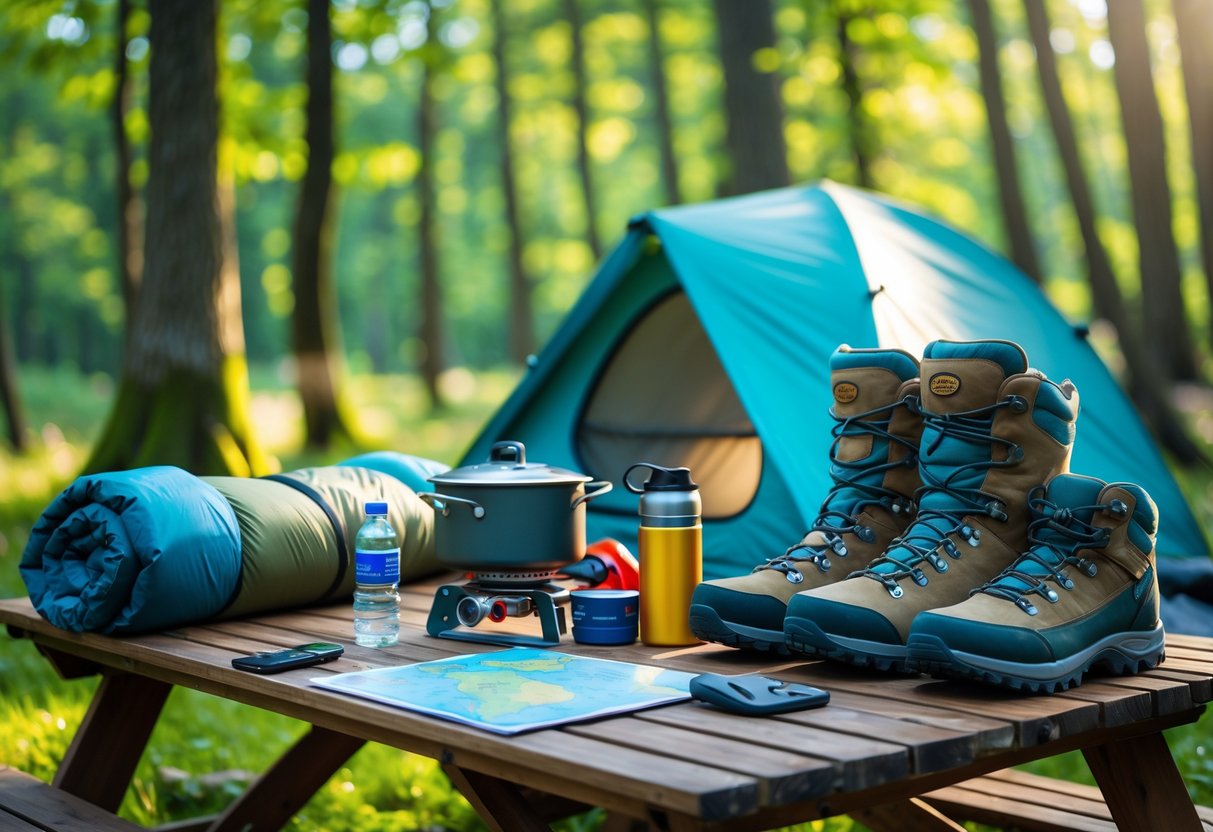
Getting the right gear makes the difference between a comfortable night outdoors and a miserable experience. I focus on four main categories: shelter, sleep systems, packs, and tools that keep you safe and prepared.
Tent Selection and Setup
I recommend choosing a tent based on how many people will sleep in it, plus one extra person for gear space. A two-person tent works well for solo campers who want room for their equipment.
Look for tents with a rainfly that extends to the ground. This keeps water from splashing underneath during storms. The tent should have a waterproof rating of at least 1,500mm for the floor and 1,000mm for the walls.
Key tent features I prioritize:
- Freestanding design (easier to move and position)
- Vestibule space for gear storage
- Color-coded poles for quick setup
- Interior pockets for small items
Practice setting up your tent at home before your trip. I’ve seen too many campers struggle with poles and stakes in the dark or during rain.
Sleeping Bags and Pads
Your sleeping bag needs to match the lowest temperature you expect at night. Temperature ratings tell you the coldest temperature where the bag keeps you warm. I add 10-15 degrees to the rating as a safety buffer.
Sleeping bags come in two main shapes. Rectangular bags offer more room to move. Mummy bags trap heat better but feel tighter around your body.
A sleeping pad matters just as much as your bag. The ground pulls heat from your body all night. I use pads with an R-value of 2-3 for summer camping and 4+ for cold weather. Foam pads cost less and never puncture. Inflatable pads pack smaller and feel more comfortable.
Backpacks and Packing Tips
I choose pack size based on trip length. Day hikes need 20-30 liters. Weekend trips require 40-50 liters. Week-long adventures need 60+ liters.
Pack organization I follow:
- Heavy items close to my back, between shoulder blades
- Sleeping bag at the bottom
- Tent and poles on the outside or bottom
- Frequently used items in top pocket
- Water and snacks in side pockets
Adjust the hip belt first when fitting a pack. The hips should carry 80% of the weight, not your shoulders. Tighten shoulder straps just enough to pull the pack close to your body.
Camping Tools and Equipment
I bring a headlamp instead of a flashlight because it keeps my hands free. Pack extra batteries in a waterproof bag.
A multi-tool or knife handles most cutting tasks at camp. I prefer tools with pliers, a blade, scissors, and a can opener built in.
My essential tool list:
- Fire starter (waterproof matches and lighter)
- Water filter or purification tablets
- First aid kit with bandages, pain relievers, and blister treatment
- Rope or paracord (50 feet minimum)
- Repair kit with duct tape and safety pins
A camping stove provides reliable cooking when fires aren’t allowed. Canister stoves light easily and work well for beginners. Bring fuel based on burn time – most canisters last 2-3 hours of cooking.
Choosing the Right Campsite
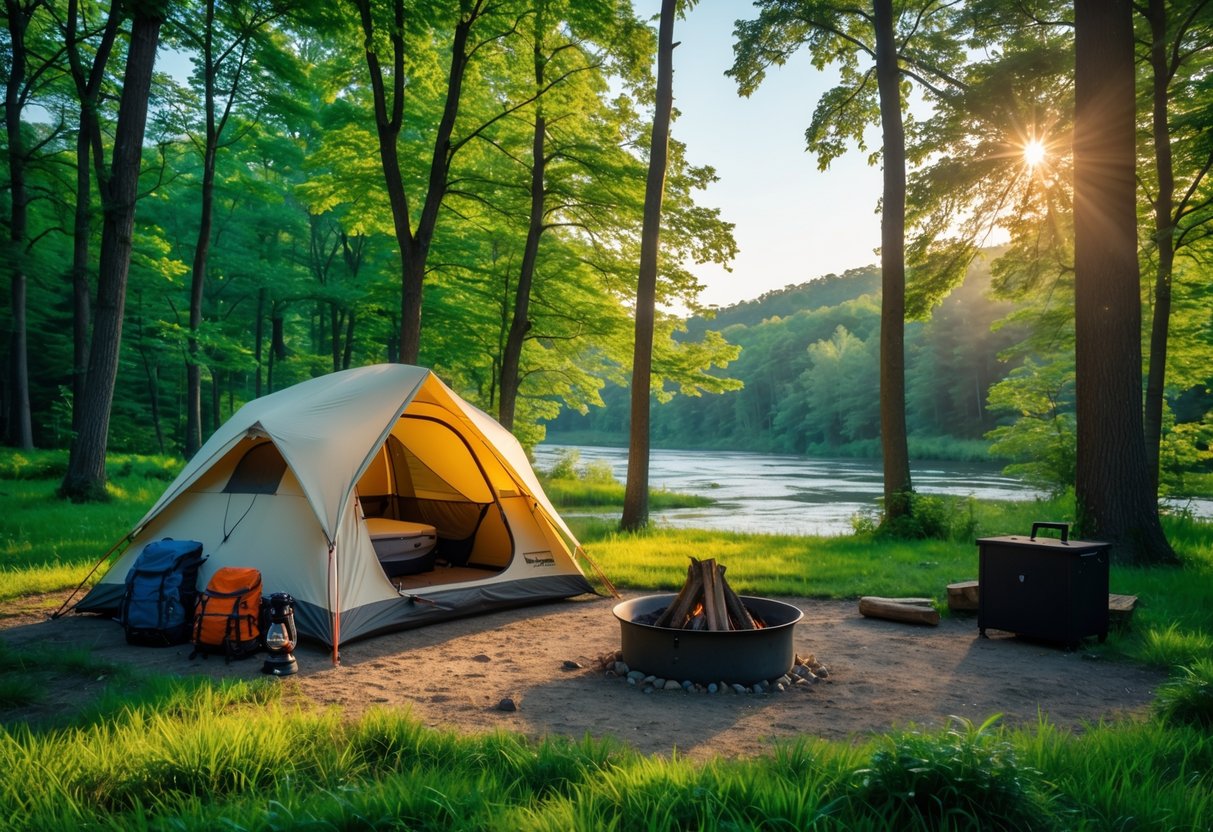
Your campsite determines your comfort, safety, and overall experience outdoors. I focus on three main factors: finding the right location, preparing the site properly, and checking for potential hazards.
Location Considerations
I look for level ground first. Sleeping on a slope means rolling around all night or waking up with a sore back.
Key location factors I evaluate:
- Distance from water – I camp at least 200 feet from lakes or streams to protect water sources and avoid bugs
- Terrain type – I avoid low spots where rain collects and choose areas with good drainage
- Sun exposure – I pick sites with morning sun for warmth and afternoon shade for comfort
- Wind protection – I look for natural windbreaks like trees or rock formations
I check the ground surface carefully. Soft dirt or pine needles work better than rocks or roots. I also consider proximity to facilities if I’m at an established campground.
The best sites balance convenience with privacy. I stay away from high-traffic areas near bathrooms or main roads.
Site Preparation
I clear the tent area of sticks, rocks, and pinecones before setting up. Even small objects create uncomfortable pressure points through a sleeping pad.
I identify zones for different activities. My cooking area goes at least 15 feet from my tent. I set up my food storage even farther away.
I check overhead for dead branches or “widow makers” that could fall. I also look for anthills and animal burrows before claiming a spot.
If I’m camping on established sites, I use existing fire rings and tent pads. This reduces my impact on the environment.
Safety Assessment
I avoid camping under dead trees or loose rocks on slopes above me. I check the weather forecast and skip areas prone to flash flooding during storms.
Safety red flags I watch for:
- Standing dead trees nearby
- Dry streambeds (flash flood risk)
- Animal tracks or scat close to the site
- Poison ivy or other hazardous plants
I keep my distance from cliff edges and steep drop-offs, especially when camping with kids. I also note the nearest emergency exit routes and where my vehicle is parked.
Campfire and Cooking Basics
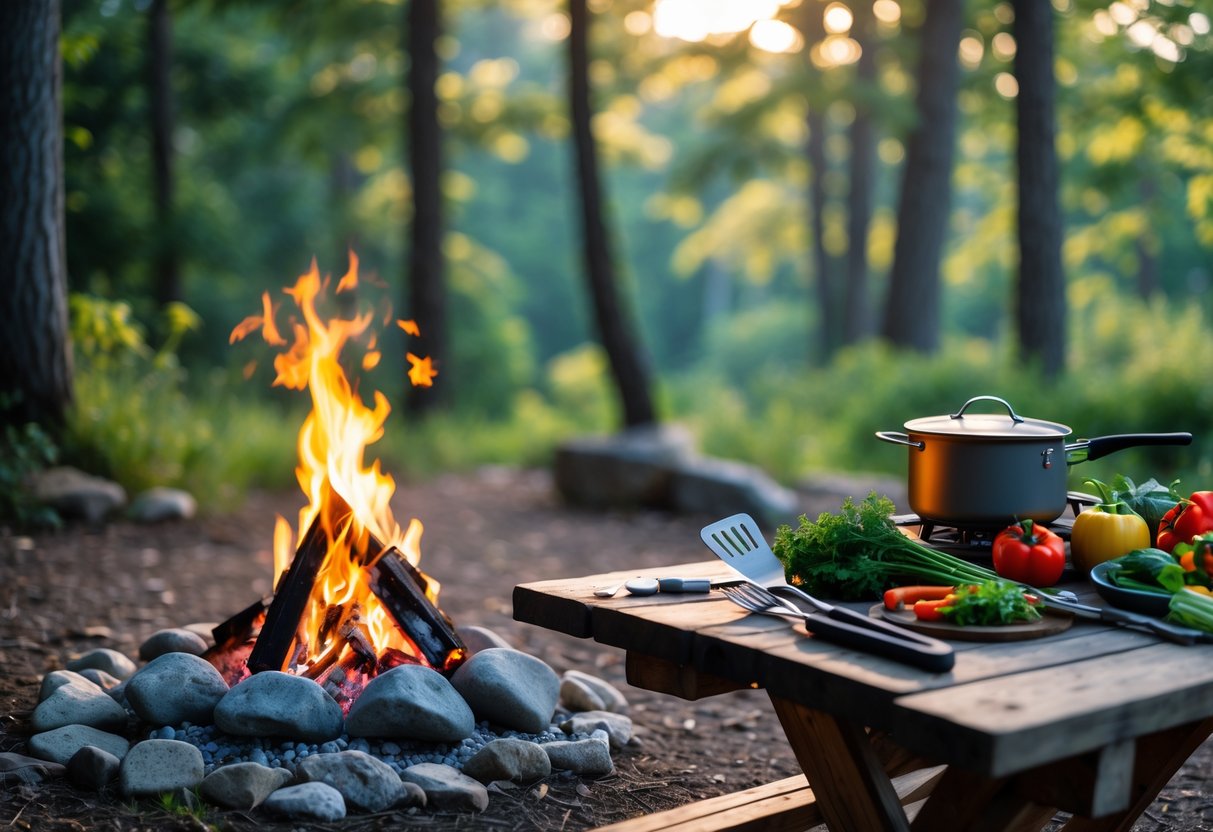
A safe campfire requires proper location selection and fire management, while successful outdoor cooking depends on choosing the right method and storing food correctly to prevent wildlife encounters.
Campfire Safety
I always clear a 10-foot radius around my fire pit before starting a fire. This means removing leaves, sticks, and any flammable materials that could catch a spark.
I build my fires in designated fire rings when available. If I need to create a new fire pit, I dig down to mineral soil and surround it with rocks. I keep my fires small and manageable, which makes them easier to control and uses less wood.
Essential safety rules I follow:
- Keep water and a shovel nearby at all times
- Never leave a fire unattended
- Build fires away from overhanging branches and tent walls
- Fully extinguish fires by drowning with water and stirring the ashes until cool to touch
I check local regulations before my trip since many areas have seasonal fire bans. Wind conditions matter too. I avoid building fires when winds exceed 15 mph because embers can travel and start spot fires.
Cooking Methods at Camp
I use different cooking methods depending on what I’m making and what equipment I brought.
Direct grilling works well for hot dogs, burgers, and vegetables. I place food on a grate directly over hot coals, not flames. The coals provide steady heat without burning the food.
Dutch oven cooking lets me make stews, bread, and even desserts. I set the Dutch oven on a bed of coals and place additional coals on the lid for even heating.
Camp stoves offer the most control and work when fire restrictions are in place. I pack a two-burner propane stove for meals that need precise temperature control.
Foil packet cooking is my go-to for easy cleanup. I wrap seasoned meat and vegetables in heavy-duty aluminum foil and nestle the packets in hot coals for 15-20 minutes.
I always bring a long-handled spatula and tongs to keep my hands away from heat. A simple grill grate that sits over the fire pit expands my cooking options significantly.
Food Storage and Preparation
I prep ingredients at home whenever possible. I chop vegetables, portion out spices, and marinate meats before leaving. This cuts down on waste and saves time at camp.
Proper food storage prevents wildlife problems:
- Store all food and scented items in bear-proof containers or hang them 12 feet high and 6 feet from tree trunks
- Keep raw meat separate from other foods in sealed containers
- Pack perishables in a cooler with plenty of ice
- Never store food inside my tent
I use a designated preparation area away from my sleeping area. I wash dishes immediately after meals using biodegradable soap at least 200 feet from water sources.
Ice blocks last longer than ice cubes in coolers. I freeze water bottles and use them as ice packs that turn into drinking water as they melt. I keep my cooler in the shade and open it only when necessary.
I pack shelf-stable foods like pasta, rice, and canned goods for later in the trip when fresh items run out.
Clothing and Personal Items
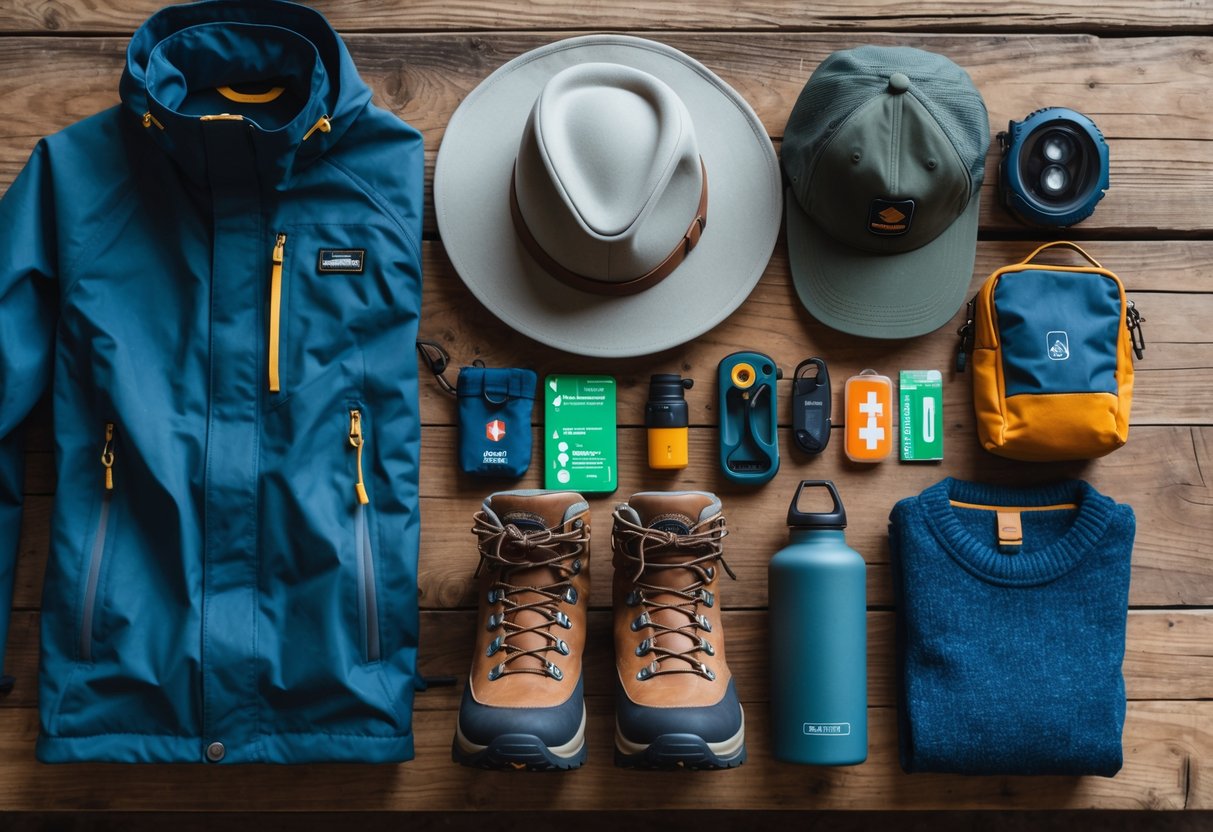
The right clothing keeps you comfortable in changing weather conditions, while proper footwear and hygiene items ensure your safety and well-being throughout your trip.
Layering for Weather
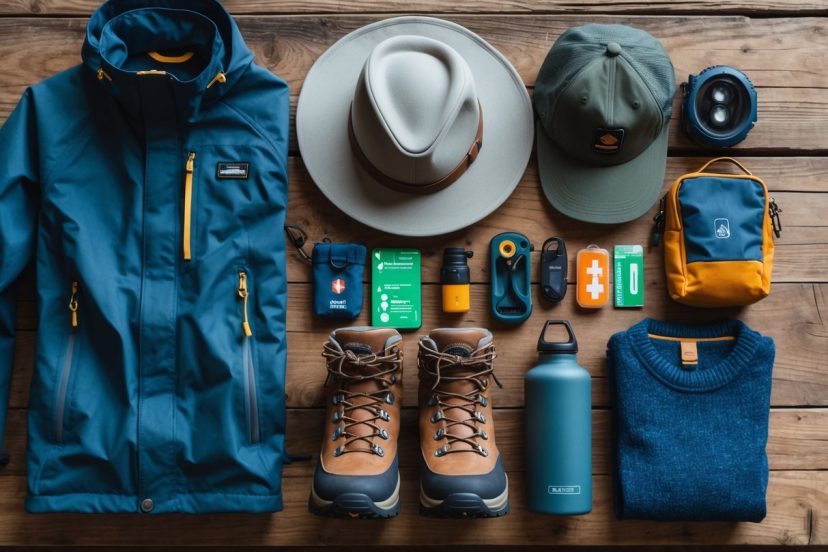
I always pack three distinct clothing layers to handle temperature changes effectively. The base layer sits against your skin and should be made of moisture-wicking material like merino wool or synthetic fabric. This layer pulls sweat away from your body to keep you dry.
The middle insulating layer traps warm air and includes items like fleece jackets or down vests. I choose the thickness based on the expected nighttime temperatures at my camping location.
The outer shell layer protects against wind and rain. I bring a waterproof jacket with sealed seams and a hood. This layer should be breathable to prevent moisture buildup from the inside.
Essential clothing items:
- 2-3 moisture-wicking shirts
- 1-2 pairs of quick-dry pants
- Insulating jacket or fleece
- Waterproof rain jacket and pants
- Extra underwear and socks
- Warm hat and sun hat
- Gloves (for cold weather)
Footwear Selection
I invest in quality hiking boots or shoes as my primary footwear choice. The shoes need ankle support for uneven terrain and should be broken in before the trip to prevent blisters.
Trail shoes work well for established campgrounds with minimal hiking. Hiking boots provide better support for rough trails and carrying heavy packs. I make sure they’re waterproof or water-resistant for wet conditions.
I always pack camp shoes like lightweight sandals or slip-on shoes. These give my feet a break after hiking and work well for short trips around the campsite. Wool or synthetic hiking socks prevent blisters better than cotton.
Personal Hygiene Essentials
I pack biodegradable soap for washing hands, dishes, and bathing. Regular soap harms the environment when used outdoors. Hand sanitizer serves as a backup when water isn’t available.
My toiletry kit includes a toothbrush, toothpaste, and toilet paper in a waterproof bag. I bring a small towel made from quick-dry microfiber material. Sunscreen and lip balm with SPF protection prevent sun damage during outdoor activities.
For waste management, I pack a trowel for digging catholes at least 200 feet from water sources. Wet wipes help with quick cleanups, but I pack them out in a sealed bag since they don’t decompose. Women should bring menstrual products and disposal bags.
Outdoor Safety and First Aid
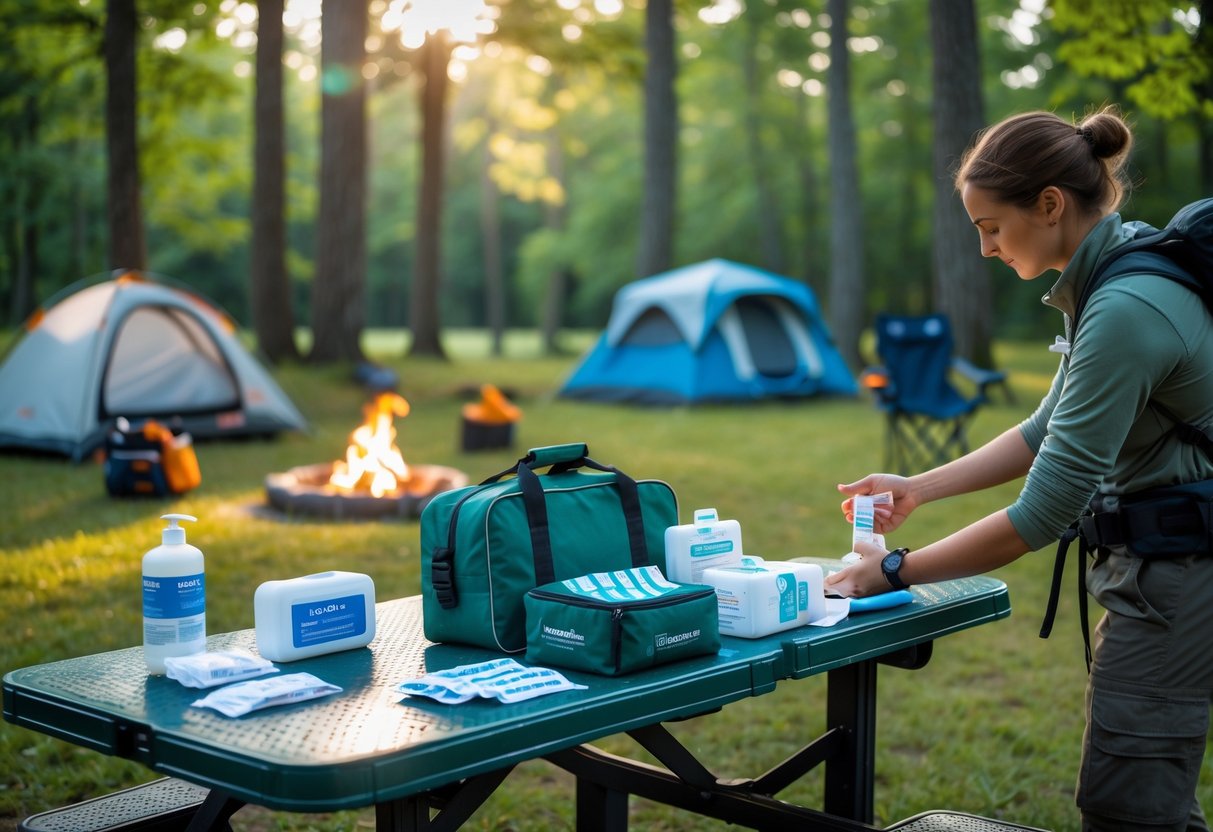
A well-stocked first aid kit, knowledge of local wildlife, and a solid emergency plan can mean the difference between a minor incident and a serious situation in the backcountry.
First Aid Kit Essentials
I always pack a comprehensive first aid kit before heading into the outdoors. The kit should include adhesive bandages in various sizes, gauze pads, medical tape, and antiseptic wipes for treating cuts and scrapes.
I make sure to include tweezers for removing splinters or ticks, scissors, and disposable gloves. Pain relievers like ibuprofen and antihistamines for allergic reactions are essential medications to carry.
For more serious injuries, I pack elastic bandages for sprains, a triangular bandage for making slings, and blister treatment supplies. A CPR face shield and emergency blanket round out the basics.
I also bring any personal medications and add items specific to my destination, such as extra sunscreen or insect repellent. I check expiration dates on all supplies before each trip and replace items as needed.
Wildlife Awareness
I research the wildlife in my camping area before I arrive. Knowing whether bears, mountain lions, or venomous snakes are present helps me prepare appropriately.
I store all food, toiletries, and scented items in bear-proof containers or hang them at least 12 feet high and 6 feet from tree trunks. I never keep food in my tent.
If I encounter a bear, I make myself appear large, speak calmly, and back away slowly. I never run. For mountain lions, I maintain eye contact and act aggressively if approached.
I give all wildlife plenty of space and never attempt to feed or approach animals. I keep my campsite clean and dispose of trash properly to avoid attracting unwanted visitors.
Emergency Preparedness
I always tell someone my camping location and expected return date before leaving. This simple step ensures someone will notice if I don’t return on time.
I carry a fully charged cell phone in a waterproof case, though I don’t rely on it since service is often unavailable in remote areas. I also bring a whistle, which carries farther than my voice and requires less energy than shouting.
I pack a detailed map and compass as backup navigation tools. I know how to use both before heading into unfamiliar terrain.
My emergency supplies include extra water purification tablets, high-calorie emergency food, waterproof matches, and a headlamp with spare batteries. I also carry a small signal mirror and know basic distress signals.
Leave No Trace Principles
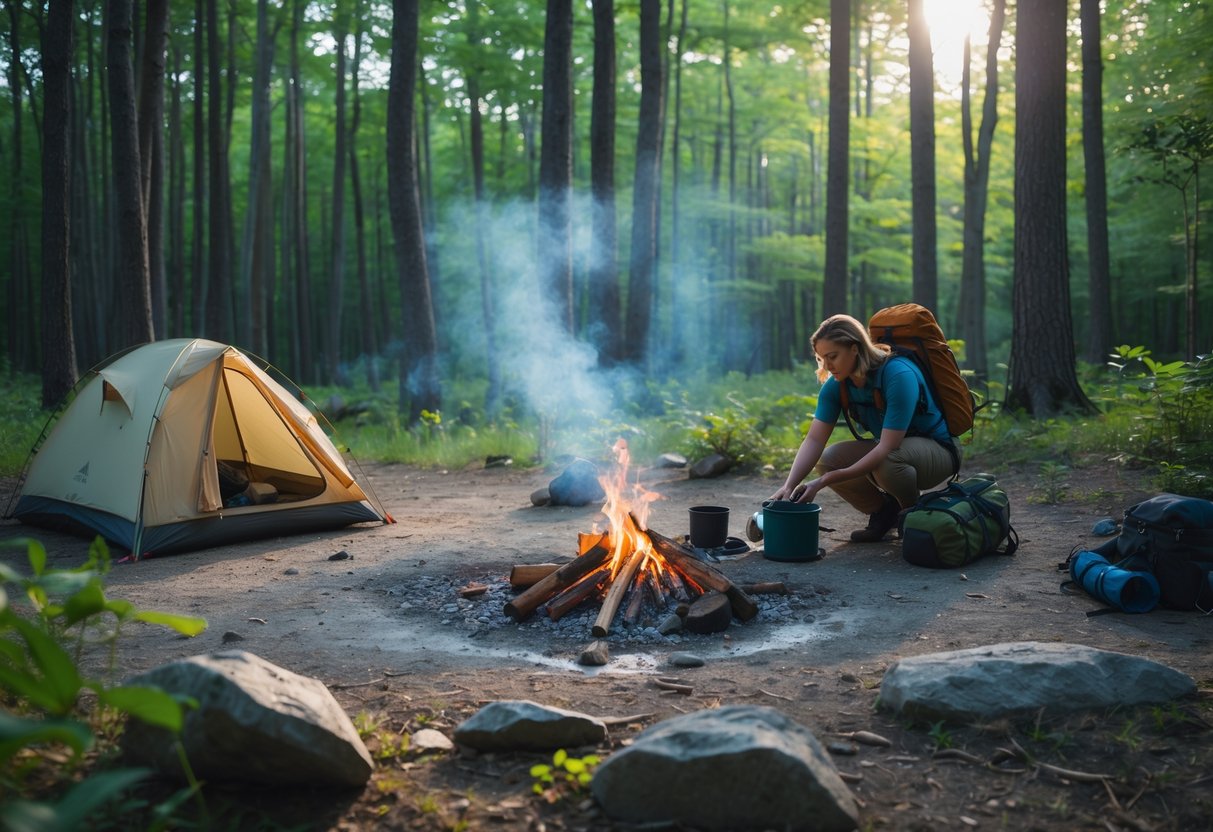
Protecting natural spaces requires specific actions for waste management and reducing your impact on the environment during camping trips.
Waste Disposal
I pack out everything I bring into the wilderness. This means all trash, leftover food, and litter go back with me in sealed bags.
For human waste, I follow the cathode method when no toilets exist. I dig a hole 6 to 8 inches deep and at least 200 feet from water sources, trails, and campsites. After use, I cover the hole completely with soil.
Toilet paper and hygiene products must be packed out in sealed plastic bags. These items don’t break down quickly and can harm wildlife. I use a dedicated waste bag that seals completely to prevent odors.
Dishwater needs proper disposal too. I strain food particles and pack them out with my trash. The remaining gray water gets scattered at least 200 feet from water sources. I use biodegradable soap sparingly, though even biodegradable products can harm aquatic ecosystems if used directly in streams or lakes.
Minimizing Environmental Impact
I stay on established trails and campsites to prevent soil erosion and plant damage. Walking through untouched areas creates new paths that take years to recover.
My campsite setup uses existing cleared spaces rather than clearing new ground. I avoid moving rocks, cutting branches, or digging trenches around my tent. When I leave, no one should know I was there.
I keep my campsite at least 200 feet from water sources to protect riparian zones where wildlife drinks and feeds. These areas support diverse plant and animal life that gets disrupted by human presence.
Fire management matters significantly. I use established fire rings when available or a camp stove instead of building new fire pits. If I build a fire, I keep it small, use only dead wood from the ground, and burn everything to ash. Before leaving, I ensure the fire is completely cold.
Navigation and Orientation
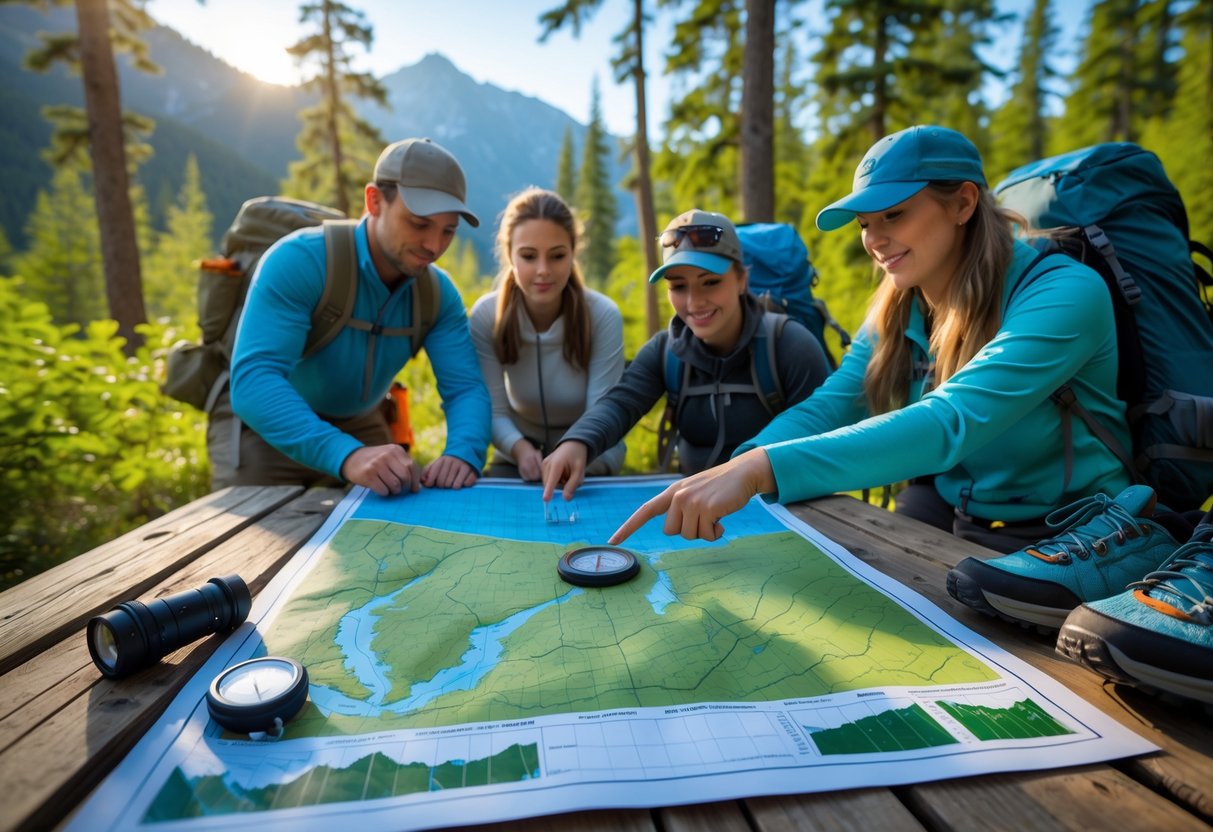
Knowing where you are and where you’re going keeps you safe in the wilderness. I rely on both traditional tools like maps and compasses alongside modern GPS devices to navigate confidently during camping trips.
Map and Compass Basics
I always carry a topographic map and compass as my primary navigation tools. Topographic maps show elevation changes through contour lines, which help me identify hills, valleys, and other terrain features.
To use a compass with a map, I first orient the map to true north. I place the compass flat on the map and align the meridian lines with the compass needle. The direction of travel arrow on my compass then points toward my intended destination.
Key compass parts I use:
- Direction of travel arrow
- Rotating bezel with degree markings
- Magnetic needle (red end points north)
- Baseplate with ruler for measuring distances
I hold the compass flat in my hand when taking bearings. This ensures accurate readings. I practice these skills before heading into the backcountry because errors in navigation compound over distance.
Using GPS Devices
GPS devices provide exact coordinates and real-time location tracking. I use them as a backup to my map and compass, not as a replacement.
I always download offline maps before my trip since many wilderness areas lack cell service. I check battery levels daily and carry extra batteries or a portable charger. Cold weather drains batteries faster, so I keep my GPS device warm in an inside pocket.
Modern GPS units show my current position, elevation, and can mark waypoints for important locations like camp or water sources. I mark my trailhead and campsite as soon as I arrive. Some devices also track my route, which helps me retrace my steps if needed.
Weather Preparedness
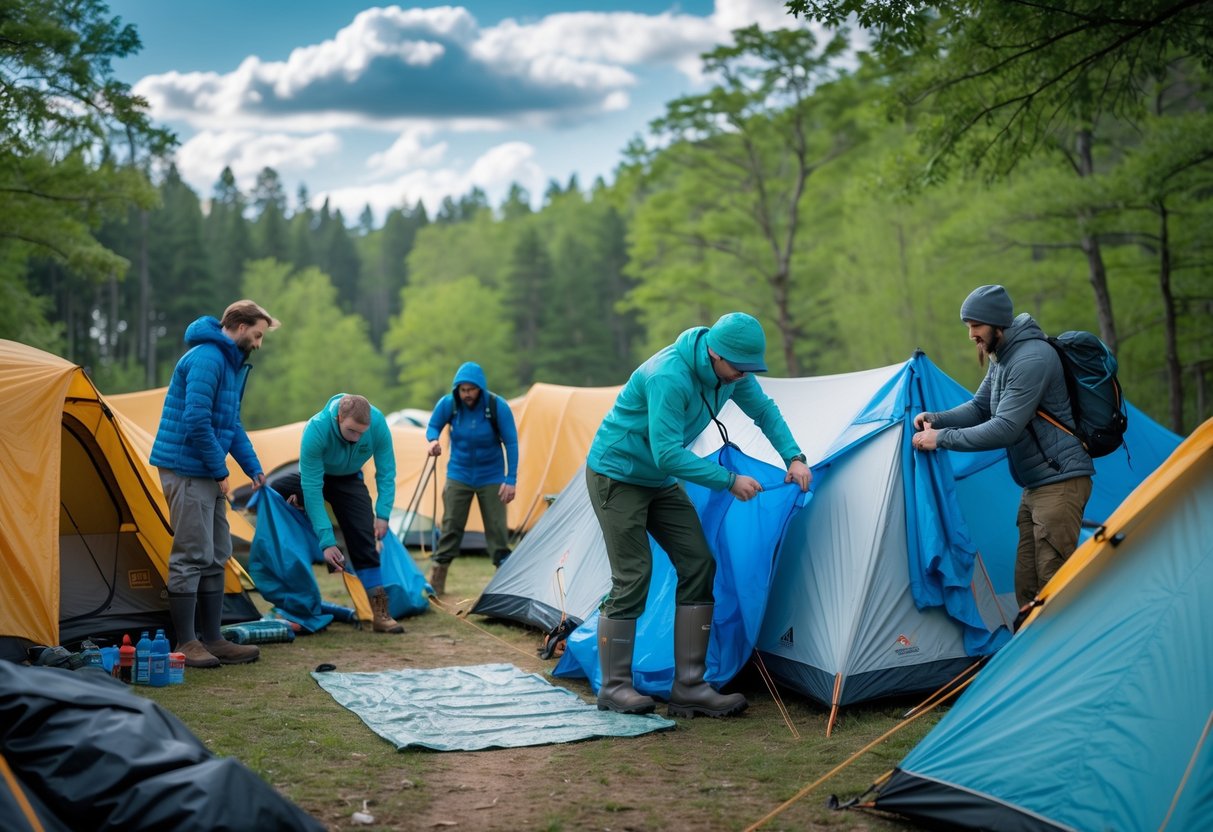
I always check the weather before heading out and pack gear for multiple conditions. Weather changes quickly outdoors, so I prepare for rain, wind, temperature drops, and sun exposure even when forecasts look clear.
Checking Weather Forecasts
I check weather forecasts 3-5 days before my trip and again the morning I leave. I use multiple sources like the National Weather Service, local news stations, and weather apps to get accurate predictions.
I look for specific details beyond just temperature. I check for precipitation chances, wind speeds, and any weather alerts or warnings. Storm systems can move faster than predicted, so I pay attention to regional weather patterns too.
I write down key information like expected high and low temperatures, rainfall amounts, and wind direction. This helps me pack the right gear and plan my activities. If severe weather is forecast, I reschedule my trip or choose a different location.
Adapting to Changing Conditions
I monitor the sky throughout my camping trip for signs of weather changes. Dark clouds, sudden wind shifts, and dropping temperatures all signal incoming weather. I also bring a portable weather radio or use my phone when I have service to get updates.
I pack my gear in layers inside my tent and keep rain covers accessible. When conditions change, I adjust my plans immediately rather than waiting. If storms approach, I secure loose items, close tent vents, and move away from tall trees or exposed ridges.
I always have backup shelter options and know where the nearest solid structures are located. I bring extra tarps to create covered areas and pack clothing for both warm and cold weather. My rule is to prepare for conditions 20 degrees colder and wetter than forecasted.
Health and Nutrition
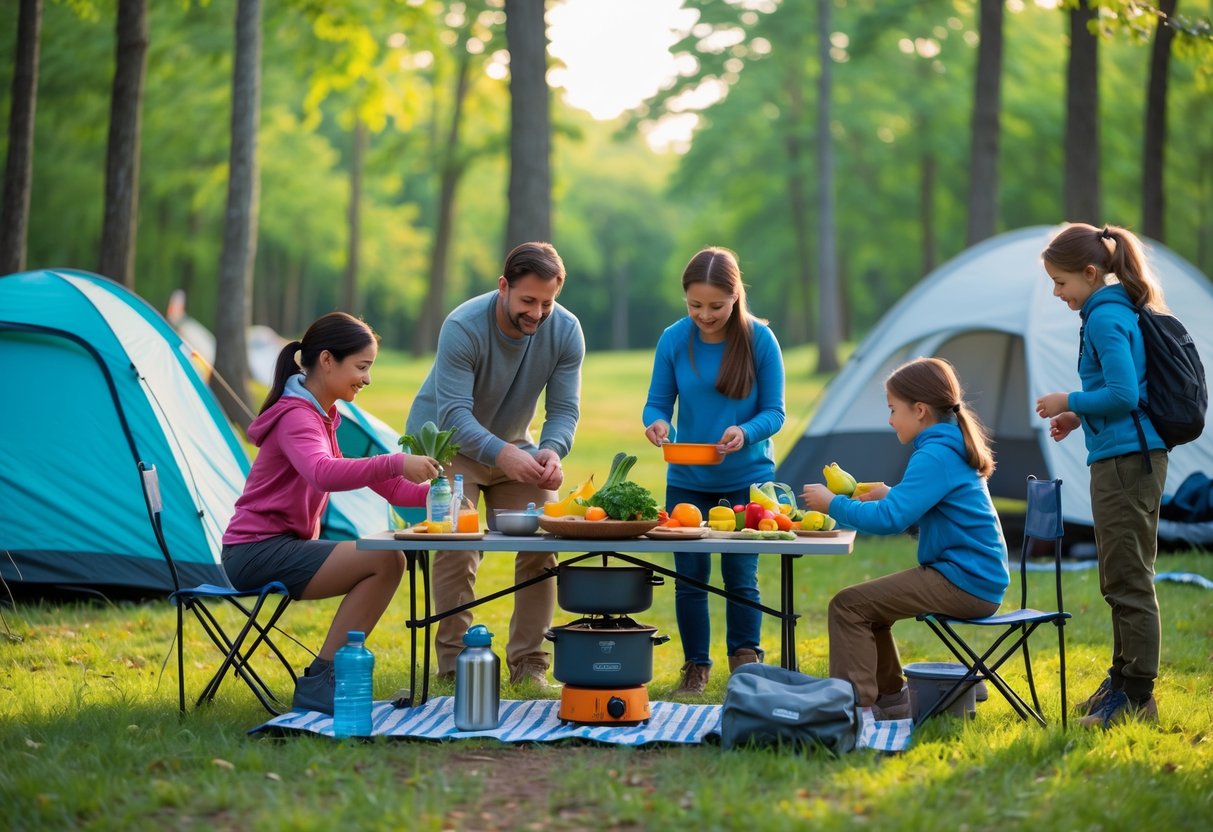
Your body works harder outdoors, burning more calories while hiking, setting up camp, and exploring. I focus on nutrient-dense foods and consistent hydration to maintain energy and support recovery throughout the trip.
Meal Planning
I plan meals around three key nutrients: carbohydrates for quick energy, protein for muscle recovery, and healthy fats for sustained fuel. Fresh vegetables, lean proteins like chicken or fish, and whole grains provide balanced nutrition without excess salt or added sugar.
I prepare meals before leaving when possible. Pre-cut vegetables, portioned proteins, and measured grains save time at camp and reduce food waste. I pack foods that don’t spoil quickly in warm weather, like hard cheeses, nut butters, and dried fruits.
For breakfast, I choose options like oatmeal with nuts, eggs with vegetables, or whole grain wraps. Lunch works best as lighter fare—wraps, trail mix, or sandwiches on whole grain bread. Dinner can include foil-packet meals with protein and vegetables, one-pot pasta dishes, or grilled lean meats with roasted vegetables.
Essential camping foods I always pack:
- Whole grain bread or tortillas
- Canned beans or pre-cooked lentils
- Fresh fruits that travel well (apples, oranges, bananas)
- Nuts and seeds
- Olive oil or avocado oil
- Spices and herbs for flavor
Staying Hydrated
I drink water consistently throughout the day, not just when I feel thirsty. My body loses more fluids through sweating and increased activity, making dehydration a real risk that can cause fatigue and headaches.
I aim for at least 2-3 liters of water daily, increasing this amount in hot weather or during strenuous activities. I carry a reusable water bottle and refill it at every opportunity. Water purification tablets or a portable filter let me safely use natural water sources when needed.
I monitor my hydration by checking urine color—pale yellow indicates good hydration, while dark yellow signals I need more water. I also eat water-rich foods like cucumbers, watermelon, and oranges to supplement my fluid intake.
Camping Etiquette and Community
When camping in shared spaces, your actions directly affect the experience of those around you. Keeping noise levels appropriate and showing respect for others’ space creates a positive environment for everyone at the campground.
Noise and Privacy
I always keep my noise levels low, especially during quiet hours. Most campgrounds enforce quiet times between 10 PM and 6 AM, but I practice consideration throughout the day.
Music and loud conversations carry farther than you think in outdoor settings. I use headphones for music and keep my voice at a normal volume. If I’m camping with a group, I remind everyone to be mindful of their noise.
I give neighboring campsites their privacy by not walking through them. Even if it seems like a shortcut, I stick to designated paths and roads. I also avoid staring into other campsites or setting up my chairs facing their area.
When kids are playing, I make sure they understand campsite boundaries. They shouldn’t run through other people’s sites or disturb their belongings.
Respecting Fellow Campers
I never claim a campsite that isn’t mine or take one that someone else has reserved. This includes first-come, first-served sites where someone has already set up their gear.
Shared facilities like bathrooms, water spouts, and trash areas require patience. I keep my time brief at these spots and leave them clean for the next person.
I keep my campsite tidy and don’t let my gear spill into neighboring areas. My tent, coolers, and equipment stay within my designated space.
If I arrive late or leave early, I minimize noise from car doors, talking, and setting up or packing gear. I use a headlamp instead of bright lanterns that might shine into other sites.
Frequently Asked Questions
New campers often have similar questions about gear, planning, and what to expect on the trail. I’ve compiled answers to the most common camping questions to help you feel prepared and confident before your first outdoor adventure.
What should be included in a basic camping essentials checklist?
A basic camping checklist starts with shelter, which means a tent, ground tarp, and sleeping gear like a sleeping bag and pad. You need cooking equipment including a camp stove, fuel, cookware, utensils, and a cooler for food storage. Clothing should include layers for changing weather, rain gear, and extra socks.
I always pack a first aid kit, flashlight or headlamp with extra batteries, and navigation tools like a map and compass. Personal items include toiletries, sunscreen, insect repellent, and any medications you take regularly.
Don’t forget water containers and a way to purify water if your campsite doesn’t have potable water. Matches or a lighter, multi-tool, and trash bags round out the basics.
Which are the top five items you must pack for a camping trip?
The five most important items are shelter, sleep system, water, food, and fire-starting equipment. Your tent protects you from weather and insects while you rest. A proper sleeping bag rated for the expected temperature keeps you warm through the night.
Water is critical for hydration and cooking, so I bring enough containers and purification tablets. Non-perishable food that’s easy to prepare ensures you stay fueled for activities.
Fire-starting tools like waterproof matches or a lighter help you cook meals and stay warm. These five items address your basic survival needs in the outdoors.
What are the ten essentials for a successful camping experience?
The ten essentials system includes navigation tools, sun protection, insulation layers, illumination, first aid supplies, fire-starting equipment, repair kit and tools, nutrition, hydration, and emergency shelter. Navigation means carrying a map, compass, or GPS device to avoid getting lost.
Sun protection includes sunglasses, sunscreen, and a hat to prevent burns and eye damage. Insulation covers extra clothing layers for unexpected temperature drops.
I pack a headlamp or flashlight for nighttime activities and camp tasks. The first aid kit treats minor injuries and medical issues that arise on the trail. Fire-starting gear helps with cooking and emergency warmth.
A repair kit contains duct tape, cordage, and a multi-tool for fixing broken equipment. Extra food beyond your meal plan provides calories if you stay longer than expected. Water bottles and purification methods keep you hydrated safely.
Emergency shelter like a space blanket or bivy sack protects you if your main shelter fails.
How can beginners prepare for their first camping adventure?
I recommend starting with car camping at an established campground with amenities like restrooms and potable water. Research campsites online and read reviews to find beginner-friendly locations close to home.
Practice setting up your tent in your backyard before the trip. This helps you learn the process without pressure and identifies any missing stakes or broken poles.
Test your gear at home by using your sleeping bag and trying out your camp stove. About 33% of campers start planning a month ahead, which gives you time to gather equipment and make reservations.
Visit outdoor retailers or watch online tutorials to learn basic skills like starting a campfire safely. Make a checklist and pack everything the day before to avoid last-minute stress.
What is the best way to create a family camping checklist?
Start by making a master list divided into categories: shelter, sleeping, cooking, clothing, and personal items. I add a separate section for kid-specific gear like comfort items, extra snacks, and entertainment.
Include everyone in the planning process so family members can request items they need. Each person should have their own headlamp, water bottle, and toiletry kit.
For children, pack extra clothes since they get dirty faster than adults. Bring activities like cards, books, or nature identification guides for downtime at camp. I always add a few comfort items from home to help kids adjust to sleeping outdoors.
Check the weather forecast and campground rules before finalizing your list. Some sites have specific requirements or restrictions on equipment.
What are some good strategies for packing effectively for camping?
I use clear plastic bins or duffel bags to organize gear by category instead of individual backpacks. This system makes items easy to find and keeps everything contained in your vehicle.
Pack heavy items like water jugs and coolers low and centered in your car for stability. Place frequently used items like snacks, first aid kit, and toilet paper where you can reach them quickly.
Roll clothes instead of folding them to save space and reduce wrinkles. Use stuff sacks or packing cubes to compress sleeping bags and keep clothing separate from dirty items.
Create a “first night” box with essentials like your tent, sleeping gear, headlamps, and dinner supplies so you don’t dig through everything when you arrive. I keep a dedicated camping bin at home with non-perishables and gear that stays packed between trips.
Double-check your list before leaving and do a final count of critical items like tent poles, stakes, and sleeping pads. These small pieces often get left behind.